




How Should Radiology Departments Prepare for Patient Surges During Major Events?
Treat image sharing as part of surge readiness. During events like the World Cup and Olympics, delays come less from scanner capacity and more from referrals, handoffs and retrieving outside studies. Automated exchange across PACS, RIS and EHRs gets images and priors to the right clinician fast, even when the patient and specialist are in different places.
Share


Table of contents
When cities host major events like the World Cup or the Olympics, planning focuses on traffic, logistics and security. Healthcare organizations face a parallel influx of patients. In Kansas City, Missouri, public safety and medical officials expected a 6% to 8% increase in regional healthcare needs on World Cup match days. More visitors means more acute injuries, and radiology sits right in the path of every treatment decision.
Why Do Major Events Strain Radiology?
A surge doesn't just mean more scans. The bigger problem is the administrative work around each study.
- More Referrals and Handoffs: Out-of-town patients create complex handoffs between emergency teams, on-site providers and specialists.
- Outside Priors: Visitors' prior imaging lives at facilities in other cities, often behind disconnected systems.
- Remote Specialists: The clinician reviewing a case may not be in the same building or even the same city.
Consider a fan from New Orleans who needs an urgent MRI in Kansas City for a severe soft-tissue injury. The scan itself can happen quickly. The delay comes when the study and any relevant priors need to reach the right clinician in time to make a treatment decision.
Is the Bottleneck Scanner Capacity or Workflow?
Workflow. A study published in Springer Medizin used event simulation to model emergency radiology demand for tournament host cities, analyzing emergency CT volume, turnaround times and backlogs. It found that local-only coverage models become highly vulnerable during short, intense demand spikes. The core issue wasn't equipment. It was the lack of seamless connectivity in the data workflow around it.
Dr. Joshua Scott, medical director for the World Cup stadium in Los Angeles, told AuntMinnie that managing spikes requires synchronization between local emergency personnel and on-site providers, with rapid imaging access planned in advance.
What Should a Surge-Ready Imaging Workflow Include?
- Connectivity Beyond Your Walls: Links to internal departments, referral partners and off-network systems so images reach the point of care.
- Automated Reconciliation: Incoming studies match to the correct patient record without manual sorting.
- Secure Exchange Without CDs or VPNs: No physical media, isolated portals or complex VPN setups slowing handoffs.
Why Does Surge Readiness Matter for Patients, Providers and Health Systems?
- Patients Get Faster Treatment Decisions: Visitors far from home get care informed by their prior imaging, without waiting on a disc or a phone call.
- Providers and Specialists Stay in Sync: Images reach the right clinician wherever they are, which cuts handoff delays during the busiest hours.
- Health Systems Protect Capacity: Less manual chasing keeps staff focused on patients and prevents workflow backlogs from stalling the ED.
How Can Health Systems Prepare for the 2028 Olympics?
The 2026 World Cup is a blueprint for the 2028 Olympic Games in Los Angeles, which will require coordination across a vast region and multiple venues and health systems. A network that struggles to move images efficiently now will face bigger problems when demand spreads further.
How Does Medicom Help?
Medicom Connect automates clinical image exchange across PACS, RIS and EHRs, delivering scans to the point of care and reducing manual work during peak demand and everyday care alike. Read the full post, World Cup to Olympics: Handling Radiology Surges in Host Cities, or talk with Medicom.
Frequently Asked Questions
How much do major events increase healthcare demand?
Officials in Kansas City, Missouri, expected a 6% to 8% increase in regional healthcare needs during World Cup match days.
What causes imaging delays during patient surges?
Mostly the work around each study: referrals, handoffs and retrieving outside priors across disconnected systems, more than scanner capacity.
Why are local-only radiology coverage models risky during events?
Simulation research on host cities found local-only models become highly vulnerable during short, intense spikes in demand because data doesn't move seamlessly.
How can hospitals get visitors' prior imaging quickly?
Automated image exchange across PACS, RIS and EHRs retrieves outside studies and matches them to the right patient without CDs, portals or VPNs.
More Answers
Answers
Does the Size of an Image Exchange Network Matter?
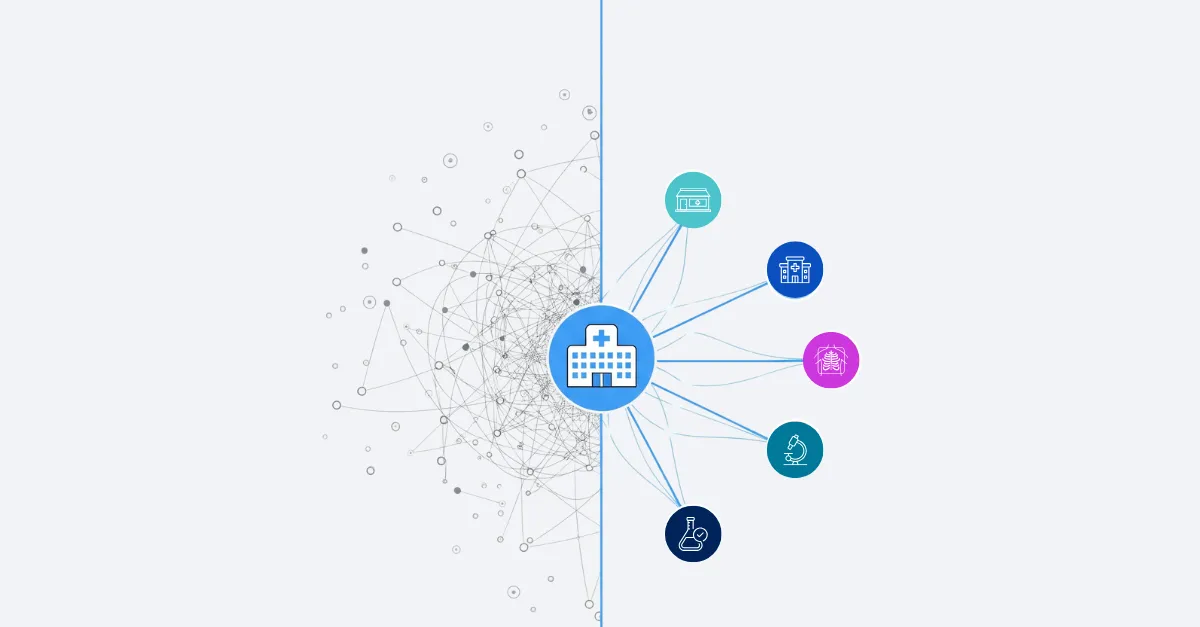
Less than vendors suggest. A long list of connected sites doesn't help if those connections still require manual requests and waiting. What matters is whether your key referral partners are connected reliably, whether exchanges run automatically and whether imaging lands directly in the EHR. Quality and automation beat sheer network size.
Answers
How Does SMART on FHIR Close the Imaging Interoperability Gap?
FHIR gives EHRs, VNAs and other systems a common language for exchanging health data, and SMART on FHIR lets clinicians securely launch imaging apps from inside the patient chart. Together they close interoperability's last mile: the gap between imaging that's available somewhere and imaging that's actionable at the point of care.

Answers
How Can AI Replace Manual Procedure Mapping for Prior Imaging Retrieval?
A large language model trained on radiology procedures can understand what an exam means instead of relying on rigid code maps. Medicom Smart Search uses an LLM trained on more than 50 million radiology procedures to find relevant priors for upcoming appointments, works after an HL7 connection without months of mapping and adapts when compendiums change.
Your Plan for Enterprise Imaging Interoperability
Talk to one of our experts to plan your interoperability strategy, explore workflows, or get a personalized demo. We’re here to help.
