




How Does SMART on FHIR Close the Imaging Interoperability Gap?
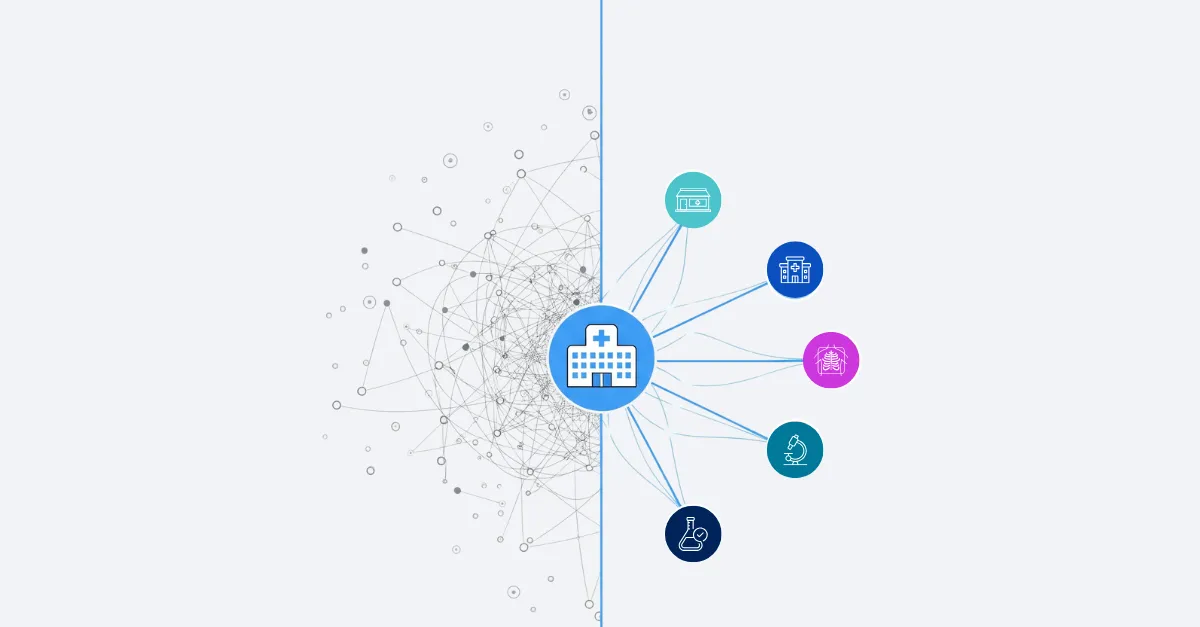
FHIR gives EHRs, VNAs and other systems a common language for exchanging health data, and SMART on FHIR lets clinicians securely launch imaging apps from inside the patient chart. Together they close interoperability's last mile: the gap between imaging that's available somewhere and imaging that's actionable at the point of care.
Share


Table of contents
Healthcare has built powerful EHRs and massive vendor neutral archives, yet clinicians still find the patient's imaging story trapped in a separate system or on a CD. That's interoperability's last-mile problem: the gap between data being available and data being actionable at the point of care.
What Does the Imaging Last-Mile Gap Cost?
- Incomplete Records: Clinicians log into multiple systems for a full imaging history, risking missed diagnoses, delays and duplicate exams. An ED clinician treating chest pain may lose minutes finding a prior chest X-ray in one system and a cardiac CT in another.
- Wasted Time: Staff manually locate, transfer and reconcile patient information.
- Poor Collaboration: Without centralized access, multidisciplinary teams struggle to work a case together.
- Limited Patient Access: Patients struggle to get and share their imaging for second opinions or transfers.
What Is FHIR?
FHIR (Fast Healthcare Interoperability Resources) is a standard that lets disparate systems, such as an EHR and a VNA, exchange health data in a consistent way. It's the foundation for bringing imaging into clinical workflows.
What Is SMART on FHIR?
SMART (Substitutable Medical Applications, Reusable Technologies) on FHIR provides the rules for authorization and app launch. It lets clinicians securely open an imaging application from within the patient's chart, putting relevant data at their fingertips.
What Does a SMART on FHIR Imaging Workflow Look Like?
A cardiologist receives a referral with a disc holding an outside echocardiogram.
- Launch From the Chart: Her assistant opens Medicom's Data Import app inside the EHR.
- Automatic Matching: The app pulls the study, and Patient Match reconciles demographics in the background to prevent a duplicate record.
- Notification in Context: A Checkpoint notification in the chart tells the physician new, verified imaging is available.
With one click, she sees the consolidated view without leaving her workflow.
Why Does Closing the Last Mile Matter for Patients, Providers and Health Systems?
- Patients Avoid Duplicate Exams: Complete imaging history at the point of care supports faster, safer decisions.
- Providers Stay in the Chart: No switching applications to piece together a patient's history.
- Health Systems Get More From Existing Investments: EHRs and VNAs deliver value when their data is usable where care happens, and unified data streams prepare the ground for AI.
How Does Medicom Help?
Built with some of the nation's largest academic medical centers, Medicom's SMART on FHIR applications combine enterprise unification, deep EHR integration and LLM-driven workflow automation. Read the full post, The Last Mile of Interoperability, explore Medicom's SMART on FHIR apps, or contact us.
Frequently Asked Questions
What is the last mile of interoperability?
It's the gap between health data being available somewhere and being actionable for the clinician at the point of care.
What's the difference between FHIR and SMART on FHIR?
FHIR is the data exchange standard. SMART on FHIR adds secure authorization and app launch rules so apps can open inside the EHR with patient context.
Can outside imaging from a CD be imported inside the EHR?
Yes. Medicom's Data Import app launches from the chart, pulls the study and uses Patient Match to reconcile demographics automatically.
Does SMART on FHIR replace a VNA?
No. It works alongside EHRs and VNAs to bring the imaging data they hold into the clinician's workflow.
More Answers
Answers
Does the Size of an Image Exchange Network Matter?
Less than vendors suggest. A long list of connected sites doesn't help if those connections still require manual requests and waiting. What matters is whether your key referral partners are connected reliably, whether exchanges run automatically and whether imaging lands directly in the EHR. Quality and automation beat sheer network size.

Answers
How Can AI Replace Manual Procedure Mapping for Prior Imaging Retrieval?
A large language model trained on radiology procedures can understand what an exam means instead of relying on rigid code maps. Medicom Smart Search uses an LLM trained on more than 50 million radiology procedures to find relevant priors for upcoming appointments, works after an HL7 connection without months of mapping and adapts when compendiums change.
Answers
How Do You Build an Image Exchange Strategy for a National Network?
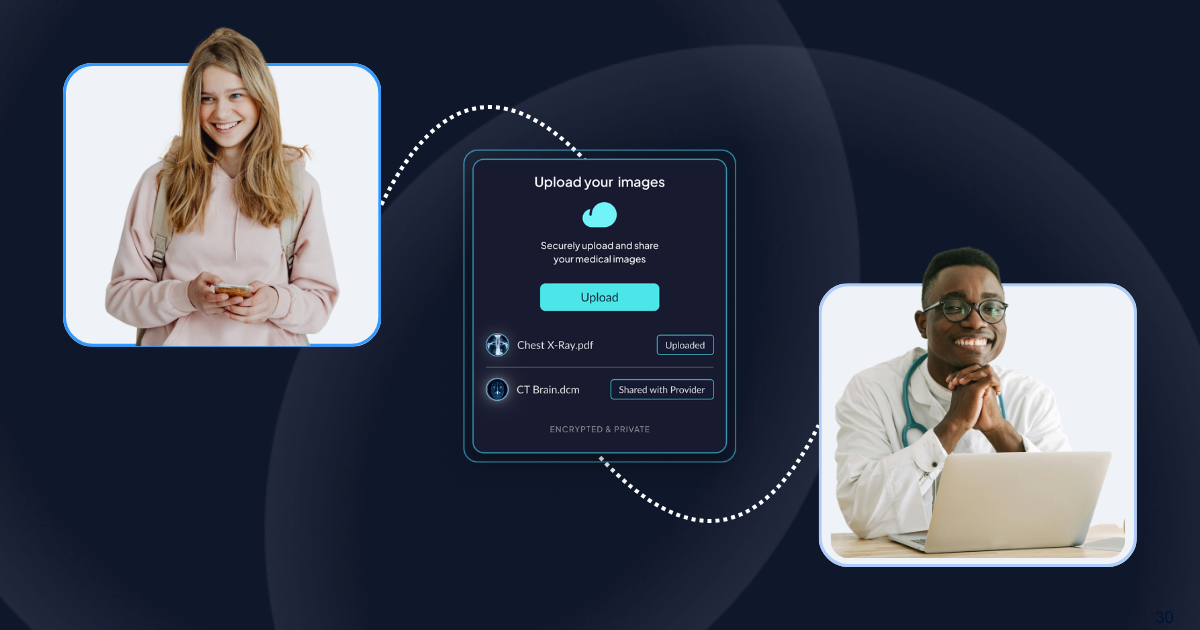
Replace partner-by-partner connections with one vendor-neutral hub. Scaling networks should unify every portal, VPN and exchange tool into a single platform, standardize one workflow for all image transfers, and hand referral partner onboarding to a managed outreach team so network growth doesn't depend on internal IT headcount.
Your Plan for Enterprise Imaging Interoperability
Talk to one of our experts to plan your interoperability strategy, explore workflows, or get a personalized demo. We’re here to help.
