




How Can AI Replace Manual Procedure Mapping for Prior Imaging Retrieval?
A large language model trained on radiology procedures can understand what an exam means instead of relying on rigid code maps. Medicom Smart Search uses an LLM trained on more than 50 million radiology procedures to find relevant priors for upcoming appointments, works after an HL7 connection without months of mapping and adapts when compendiums change.
Share


Table of contents
Before an oncology consult or a pre-op appointment, scheduling and records staff often hunt for prior images by phone, fax and slow imports. The traditional fix was a massive, handcrafted mapping file connecting different procedure codes across organizations. Those maps take months to build, break whenever a compendium changes and still miss relevant studies.
Why Do Manual Procedure Mappings Break?
- Brittle by Design: A map links specific codes, so any compendium update can break it.
- Slow to Build: Health systems can spend months debating and maintaining mappings before automation goes live.
- Missed Priors: Rigid code matching can't account for the many ways organizations describe the same exam.
How Does an LLM Find Relevant Priors?
Medicom Smart Search replaced mapping files with an LLM trained on more than 50 million radiology procedures. It understands the language and context of radiology, so it can recognize that differently worded exams describe the same thing and pull the priors that matter for an upcoming appointment.
What Changes When AI Replaces Mapping Files?
- Integration in Days, Not Months: Connect the HL7 interface, and the model works out of the box because it already understands radiology procedures.
- Built to Adapt: When a hospital updates its compendium, the model keeps working because it understands what each procedure means.
- Better Accuracy and Context: Clinical reviews have shown the LLM outperforms handcrafted mappings and finds priors older systems missed.
How Is AI-Driven Retrieval Delivered Into the EHR?
Medicom runs on a cloud-native AWS environment that trains the model, standardizes data in FHIR format and delivers results directly into the EHR, so clinicians get priors without leaving their workflow.
Why Does AI-Driven Retrieval Matter for Patients, Providers and Health Systems?
- Patients Get Care Informed by Their History: Relevant priors are found automatically before the visit, which reduces repeat scans.
- Providers See Priors in the Chart: No bouncing between applications to find past exams.
- Health Systems Skip Costly Projects: A Florida-based acquisitive health system uses Smart Search to surface priors from its acquired outpatient practices in the EHR, avoiding a costly data migration.
How Does Medicom Help?
Medicom Smart Search automates prior retrieval so the right information is in the patient's chart every time. Read the full post, How We Are Transforming Healthcare Interoperability With AI, or book a demo.
Frequently Asked Questions
What is a radiology procedure mapping file?
A handcrafted table that links procedure codes from different organizations so systems can tell which exams are related. It must be rebuilt whenever codes change.
How many procedures is Medicom's LLM trained on?
Smart Search uses an LLM trained on more than 50 million radiology procedures.
How long does it take to set up AI-based prior retrieval?
With Smart Search, a health system connects its HL7 interface and the model works out of the box, so integration takes days instead of months.
Can AI prior retrieval avoid a data migration after an acquisition?
Yes. One Florida-based health system uses Smart Search to surface priors across acquired outpatient practices in its EHR without migrating data.
More Answers
Answers
Does the Size of an Image Exchange Network Matter?
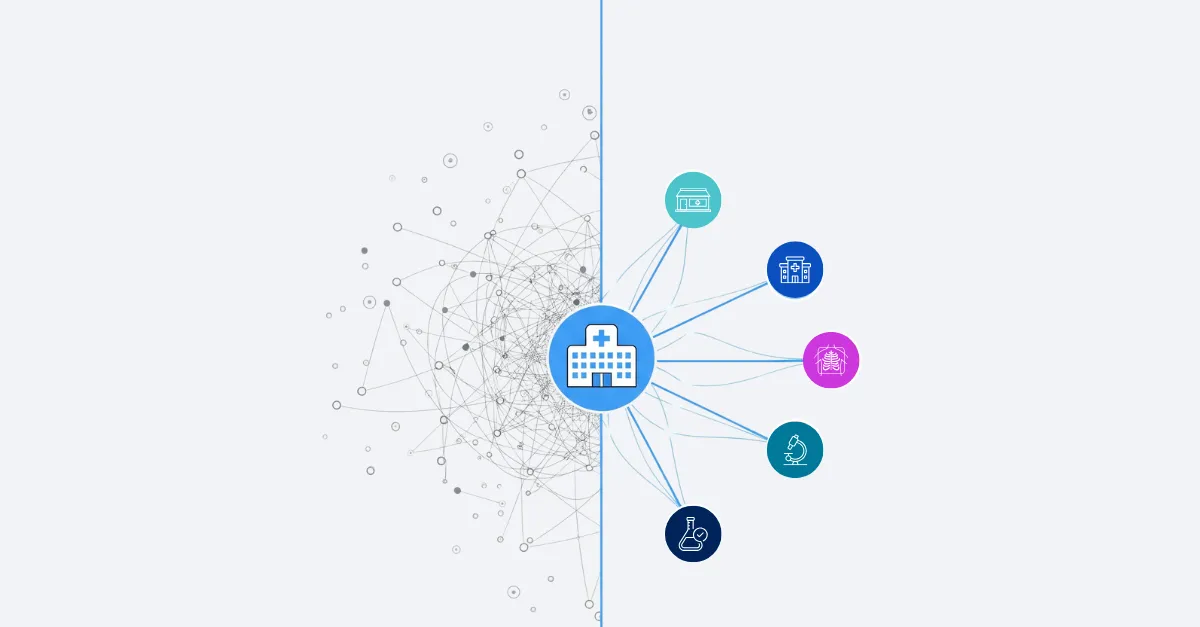
Less than vendors suggest. A long list of connected sites doesn't help if those connections still require manual requests and waiting. What matters is whether your key referral partners are connected reliably, whether exchanges run automatically and whether imaging lands directly in the EHR. Quality and automation beat sheer network size.
Answers
How Does SMART on FHIR Close the Imaging Interoperability Gap?
FHIR gives EHRs, VNAs and other systems a common language for exchanging health data, and SMART on FHIR lets clinicians securely launch imaging apps from inside the patient chart. Together they close interoperability's last mile: the gap between imaging that's available somewhere and imaging that's actionable at the point of care.
Answers
How Do You Build an Image Exchange Strategy for a National Network?
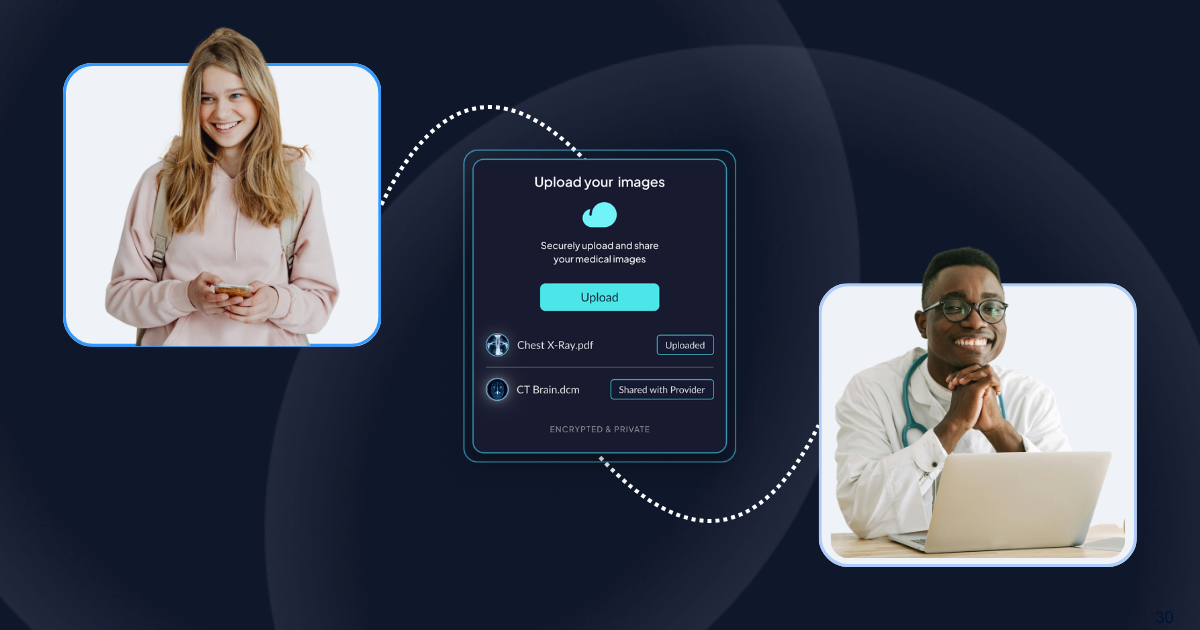
Replace partner-by-partner connections with one vendor-neutral hub. Scaling networks should unify every portal, VPN and exchange tool into a single platform, standardize one workflow for all image transfers, and hand referral partner onboarding to a managed outreach team so network growth doesn't depend on internal IT headcount.
Your Plan for Enterprise Imaging Interoperability
Talk to one of our experts to plan your interoperability strategy, explore workflows, or get a personalized demo. We’re here to help.
