

.svg)




Blog
World Cup to Olympics: Handling Radiology Surges in Host Cities
With insights from the 2026 World Cup serving as a blueprint for future event surges , Medicom Connect helps healthcare orgs streamline radiology workflows and accelerate clinical decisions during high-demand periods.


When major events like the World Cup and Olympics are planned, much of the focus centers on logistics, traffic, and security. But as cities gear up for a crush of visitors, healthcare organizations must prepare for a parallel influx of patients. In Kansas City, Missouri, for example, public safety and medical officials expected a 6% to 8% increase in regional healthcare needs during World Cup match days.
When thousands of fans and athletes crowd a metropolitan area, acute injuries rise. This leads to operational pressure that impacts more than emergency room capacity and frontline staff. It places a strain on radiology departments, where fast access to imaging is a critical factor in making timely treatment decisions. If prior scans or new images don't move cleanly through the network, the radiology workflow quickly becomes a bottleneck that stalls patient care.
Why Workflow, Not Scanning, Creates Care Delays
For imaging teams, a major event doesn't simply mean a higher volume of scans. The real headaches stem from the administrative tasks that surround each study. A surge in out-of-town patients creates more referrals, more complex handoffs, and an immediate need to retrieve outside studies, which often requires navigating disconnected systems.
The logistical puzzle extends to every major host venue. In an interview highlighted by AuntMinnie, Dr. Joshua Scott, medical director for the World Cup stadium in Los Angeles, discussed the unique experience of overseeing and coordinating critical imaging services during huge events. He shared that managing intense volume spikes requires synchronization between local emergency personnel and on-site providers. He noted that a core pillar of their strategy involves anticipating rapid imaging access needs to prevent higher-than-normal volume from hobbling a quick-care response.
In a real-world example, consider a patient from New Orleans who is in Kansas City for the World Cup and needs an urgent MRI to evaluate a severe soft-tissue injury. The scan can be completed efficiently, but delays may occur when the study needs to get to the right clinician fast enough to make a treatment decision. If the patient has relevant prior studies at an outside facility, or if the specialist reviewing the case is located elsewhere, the traditional data workflow may buckle.
This scenario is backed up by a study published in Springer Medizin. The German and Austrian journal used event simulation to model emergency radiology demand for tournament host cities. The research analyzed emergency CT interpretation volume, turnaround times, and backlogs. The findings revealed that traditional, local-only coverage models can become highly vulnerable during short, intense times for patient demand. The core issue isn't equipment capacity, but rather the lack of seamless connectivity in the data workflow surrounding it.
Turning Image Sharing Into a Tool For Peak-Demand Readiness
To prevent care delays, healthcare teams must treat digital image sharing as an essential element of surge readiness. The Medicom Connect platform addresses these operational challenges directly.
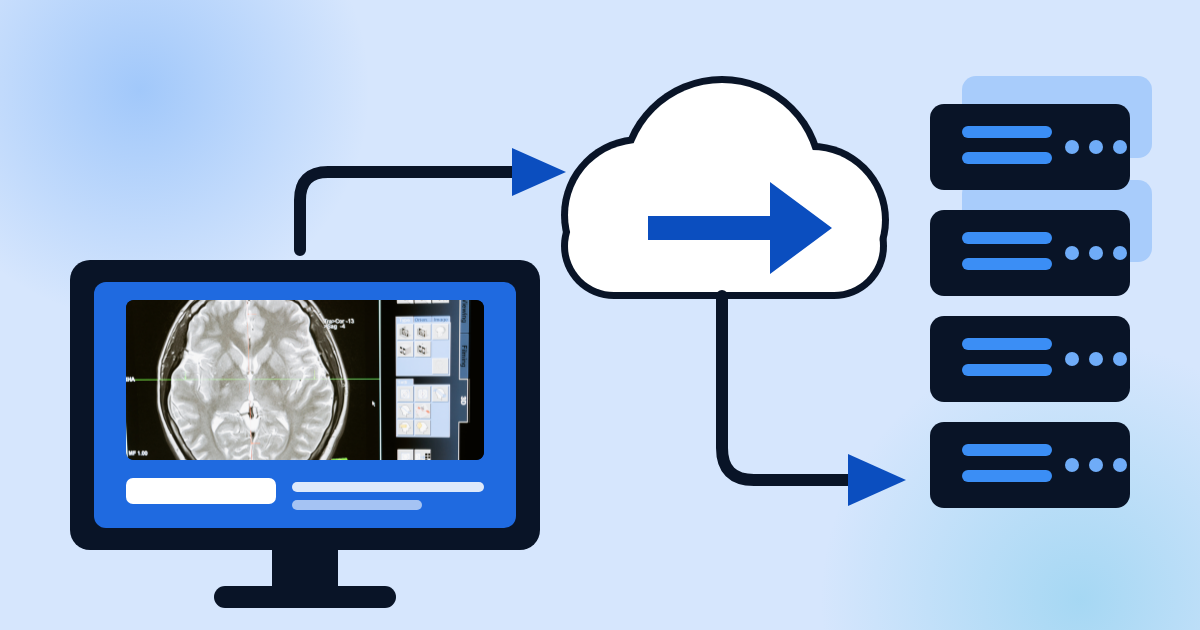
The system automates clinical image exchange across different PACS, RIS and EHRs, delivering scans directly to the point of care while reducing manual administrative tasks. By streamlining data flow, Connect helps clinicians make faster decisions for imaging needs like an urgent MRI or CT scan. The platform provides several practical clinical advantages:
- It establishes connectivity across internal departments, referral partners, and off-network systems as needed, delivering images directly to the point of care while reducing manual administrative tasks.
- It provides automated data reconciliation, helping match incoming studies to the correct patient record without manual sorting.
- It facilitates image exchange securely without relying on physical CDs, isolated provider portals, or complex VPN setups.
When a specialist needs a prior study or a patient arrives with outside imaging, the system reduces clinical handoff delays. This turns image sharing into a valuable clinical tool that actively protects capacity during periods of high volume.
Preparing for Future Surges
The insights gained during the 2026 World Cup will serve as an important blueprint for future large-scale events, including the 2028 Olympic Games in Los Angeles. The complexity of the Olympics will require extensive coordination across a vast region. If a health network struggles to move images efficiently now, it'll face even greater difficulties when demand spreads across multiple venues and health systems.
Talk with Medicom to learn how your organization can maintain efficient workflows during high-demand events and everyday care alike.
Related articles

Blog
The Hour Nobody Measures: Why Faster Prior Imaging Pays Off Far Beyond the ED
Research ties quicker access to outside patient information to shorter stays, fewer scans, fewer admissions and lower charges. Prior imaging is where the gap is widest.

Blog
Swap Tedious Detective Work for a Unified Intake Queue
Managing external image exceptions through a centralized review process allows staff to resolve demographic mismatches without delaying clinical care.
Blog
What Are the Odds Two Hospitals Describe the Same Scan the Same Way? Worse Than You'd Think.
The Hurdle Isn't Sharing DICOM Files, It's Getting Receiving Systems to Understand Them
Your Plan for Enterprise Imaging Interoperability
Talk to one of our experts to plan your interoperability strategy, explore workflows, or get a personalized demo. We’re here to help.
