




How Can Patients Upload and Share Their Own Medical Imaging Through a Portal?
Patients can upload and share imaging when the portal supports more than viewing. Medicom Upload lets patients send prior studies from a CD, USB drive or folder before a visit, and Share lets them send studies to outside providers, attorneys or insurers through a PIN-protected link, all inside the portal through SMART on FHIR.
Share


Table of contents
Patient portals have made it routine to check lab results, read notes and message care teams, and more of them now show medical imaging. Viewing a static image or a text report is only the baseline, though. Patients also need to bring imaging in from other facilities and send it out to the people involved in their care. When a portal only lets them look, their care story stays incomplete.
Why Isn't Viewing Imaging in a Portal Enough?
- Outside History Stays Outside: Patients often have years of imaging from other facilities, out-of-network centers and ER visits that never reach their new care team.
- Sending Studies Is Slow: When a patient needs to share imaging with an out-of-network provider, a law firm or an insurer, they often wait days for records or track down a physical CD.
- Closed Systems Limit Choice: Patient-centered care means patients decide where their data goes, which a view-only portal can't support.
How Do Patients Upload Outside Imaging Before a Visit?
Medicom Upload runs inside the patient portal through SMART on FHIR, so there's only one sign-in. Patients choose the folder, CD or USB drive holding their imaging from a phone, tablet or computer. The app finds the studies, skips what isn't imaging and sends the rest securely. In certain EHRs, a parent, guardian or other authorized proxy can upload for a family member.
Every upload passes through safeguards first:
- Malware Scanning: Uploads are scanned in the cloud, and anything suspicious is quarantined before it touches your network.
- Demographic Checks: If the date of birth doesn't match, the study goes to Medicom Checkpoint for administrative review instead of automatic acceptance.
- Duplicate Detection: Studies you already have are flagged before upload, keeping the archive clean.
How Do Patients Share Imaging Without a CD?
Medicom Share gives patients a mobile-friendly view of their studies inside the portal. They filter by date or exam type, select what to send, then look up a provider on the Medicom network or generate a secure link to send by email. The radiology report can travel with the images, so the recipient gets diagnostic context up front.
- Recipient Verification: Recipients unlock studies with a PIN and no account registration, so the patient never has to hand over a date of birth.
- Patient-Set Access Rules: Patients choose an expiration window and note the reason for sharing, such as a second opinion or a legal request.
- Revocable Links: Patients can cancel a link they sent by mistake.
- Flexible Downloads: Recipients view in the browser or download a secure ZIP in DICOM or JPEG. Medicom network recipients import studies in one click.
- Compliance Tracking: All sharing activity is logged to help support HIPAA and Information Blocking Rule requirements.
- Support for Fax-First Offices: Imaging can reach a fax-only office without falling back to CDs or mail.
For organizations without a FHIR-enabled EHR, Medicom Patient Link offers patients immediate study access and gives outside providers, attorneys and insurers an outbound sharing path.
Why Does Patient-Directed Imaging Matter for Patients, Providers and Health Systems?
- Patients Control Their Own Data: They decide who sees their imaging, for how long and why, without waiting on records requests or burning discs.
- Providers Walk in Prepared: Prior studies arrive before the visit, and shared studies come with the report, which cuts follow-up calls and helps avoid redundant imaging.
- Health Systems Reduce CD Handling and Risk: Built-in malware scanning, demographic checks, duplicate detection and audit logs keep the archive clean and support compliance.
How Does Medicom Help?
Upload and Share extend the portal your patients already use to handle inbound and outbound imaging. Read the full post, From Access to Agency, explore patient access, or book a demo.
Frequently Asked Questions
Can patients upload imaging from a CD to a patient portal?
Yes. With Medicom Upload, patients select a CD, USB drive or folder from a phone, tablet or computer, and the app finds and sends the imaging studies securely through the portal.
Can a parent upload imaging for a child?
In certain EHRs, a parent, guardian or other authorized proxy can upload imaging on a family member's behalf.
How do recipients open imaging a patient shares?
Recipients unlock shared studies with a PIN. No account registration is required, and they can view in the browser or download in DICOM or JPEG format.
Can a patient take back access to shared imaging?
Yes. Patients set an expiration window for each link and can cancel a link at any time.
What if our EHR doesn't support FHIR?
Medicom Patient Link gives patients immediate study access and offers outside providers, attorneys and insurers an outbound sharing path without a FHIR-enabled EHR.
More Answers
Answers
Does the Size of an Image Exchange Network Matter?
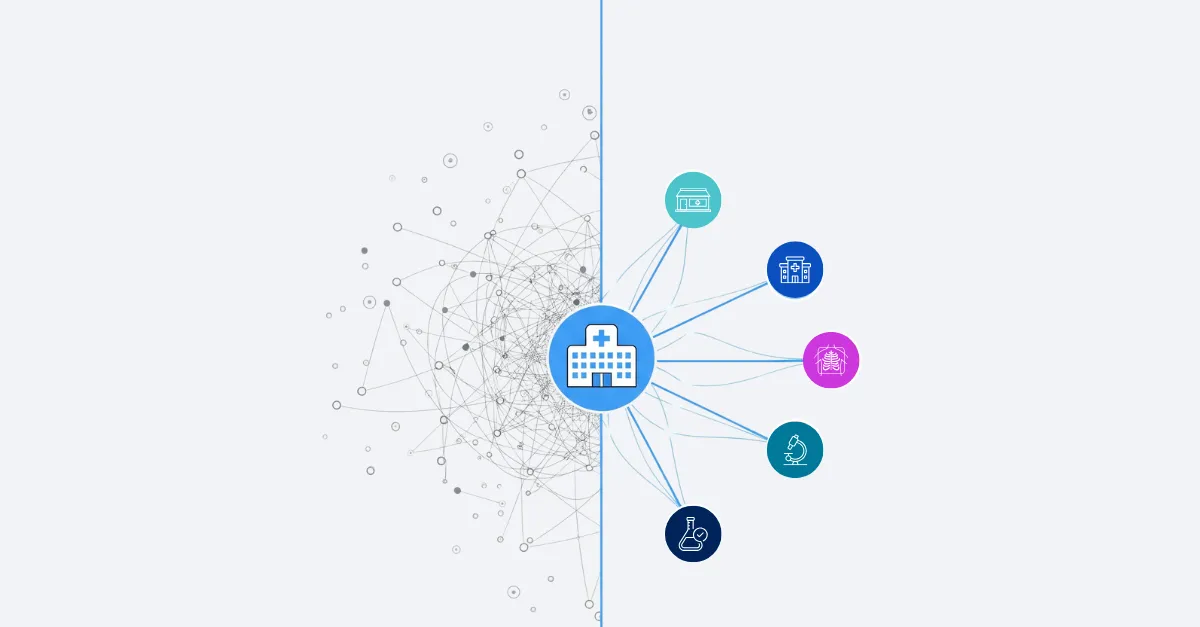
Less than vendors suggest. A long list of connected sites doesn't help if those connections still require manual requests and waiting. What matters is whether your key referral partners are connected reliably, whether exchanges run automatically and whether imaging lands directly in the EHR. Quality and automation beat sheer network size.
Answers
How Does SMART on FHIR Close the Imaging Interoperability Gap?
FHIR gives EHRs, VNAs and other systems a common language for exchanging health data, and SMART on FHIR lets clinicians securely launch imaging apps from inside the patient chart. Together they close interoperability's last mile: the gap between imaging that's available somewhere and imaging that's actionable at the point of care.

Answers
How Can AI Replace Manual Procedure Mapping for Prior Imaging Retrieval?
A large language model trained on radiology procedures can understand what an exam means instead of relying on rigid code maps. Medicom Smart Search uses an LLM trained on more than 50 million radiology procedures to find relevant priors for upcoming appointments, works after an HL7 connection without months of mapping and adapts when compendiums change.
Your Plan for Enterprise Imaging Interoperability
Talk to one of our experts to plan your interoperability strategy, explore workflows, or get a personalized demo. We’re here to help.
