




What Were the Biggest Takeaways From SIIM 2026?
SIIM 2026 shifted from flashy AI to practical execution. Governance drew the biggest crowds, presenters argued AI should work invisibly in the background, buyers weighed vendor support and implementation as heavily as software, cloud debates turned to migration planning, and federal health IT leaders called interoperability the prerequisite for smarter AI.
Share


Table of contents
Across the floor and sessions at SIIM 2026, priorities moved from flashy to practical. Nearly 68% of radiology-oriented papers at SIIM touched on AI, according to The Imaging Wire, but the conversations that drew the biggest crowds were about something less glamorous: how to manage new technology responsibly once it's in the door.
Why Did Governance Steal the Show at SIIM 2026?
Health systems, academic medical centers and community care centers are coaching teams to define a clinical or operational problem before pursuing a technology fix. As one Mayo Clinic presenter put it, if you can't articulate the problem, you aren't ready for the project.
- Paired Leadership: Physician and operational leaders share ownership of AI projects.
- Defined Success Metrics: Teams agree on what success looks like before deployment.
- Speed Through Structure: Presenters repeatedly made the case that clear governance helps teams move faster.
What Does Invisible Technology Mean for Radiology?
With a persistent radiologist shortage and climbing volumes, burnout ran under nearly every conversation. Sessions highlighted an efficiency paradox: making a clinician more efficient often means they inherit more work. Real relief comes from removing administrative tasks entirely.
Panelists agreed AI should run in the background, minimize context switching and handle heavy lifting before the clinician opens a study. When image exchange works, nobody notices it. The priors are just there.
How Are Buyers Evaluating Imaging Vendors Now?
If IT change management is 20% technical and 80% human, as the Mayo Clinic presentation suggested, software is only a small part of success. Attendees said customer support and structured implementation separate scaled success from a stalled pilot. The handoff from sales to scoping, training and clinical go-live has to be clean.
Is Cloud Still a Question for Enterprise Imaging?
Not really. Real-world migrations, including Emory University's, reported cloud performance faster and more reliable than on-premises environments. The evaluation has moved to execution:
- Thorough Gap Analysis: Evaluate functionality needs completely before migration.
- Robust Validation: Design rigorous testing and deployment methods to minimize clinical risk.
- Downtime Contingencies: Plan for resilience, such as emergency downtime systems, if connectivity falters.
Why Is Interoperability the Prerequisite for AI?
Even the most advanced discussions of automated workflows and agentic AI came back to trust, security guardrails and workflow sequencing. As pathology, ophthalmology and other specialties fold into enterprise imaging, the stakes rise. You can't orchestrate what you can't access. An official from the Office of the National Coordinator for Health IT urged a dual mandate: build smarter AI and better image sharing at the same time.
What Do These Takeaways Mean for Patients, Providers and Health Systems?
- Patients Benefit From Safer AI: Governance and validation reduce clinical risk as AI moves into broader use.
- Providers Get Real Relief: Background automation and priors that are already there cut context switching and administrative work.
- Health Systems Scale What Works: Clear metrics, strong vendor partners and a solid data-sharing foundation turn pilots into enterprise results.
How Does Medicom Help?
Medicom builds the secure image-sharing foundation that smart workflows depend on, so priors arrive in the background without extra clicks. Read the full recap, Function Beats Flash: Governance Outshines AI at SIIM 2026, or book a demo.
Frequently Asked Questions
How much of SIIM 2026 focused on AI?
Nearly 68% of radiology-oriented papers at SIIM 2026 touched on AI in some form, according to The Imaging Wire.
Why does AI governance matter in radiology?
Governance defines the problem, the owners and the success metrics before deployment, which presenters said helps teams move faster and manage AI responsibly.
What is the efficiency paradox in radiology?
Making a clinician more efficient often means they inherit more work. Real relief comes from removing administrative tasks altogether.
What should health systems check before moving imaging to the cloud?
A thorough gap analysis, a rigorous validation and deployment plan, and downtime contingencies to keep local operations running if connectivity drops.
More Answers
Answers
Does the Size of an Image Exchange Network Matter?
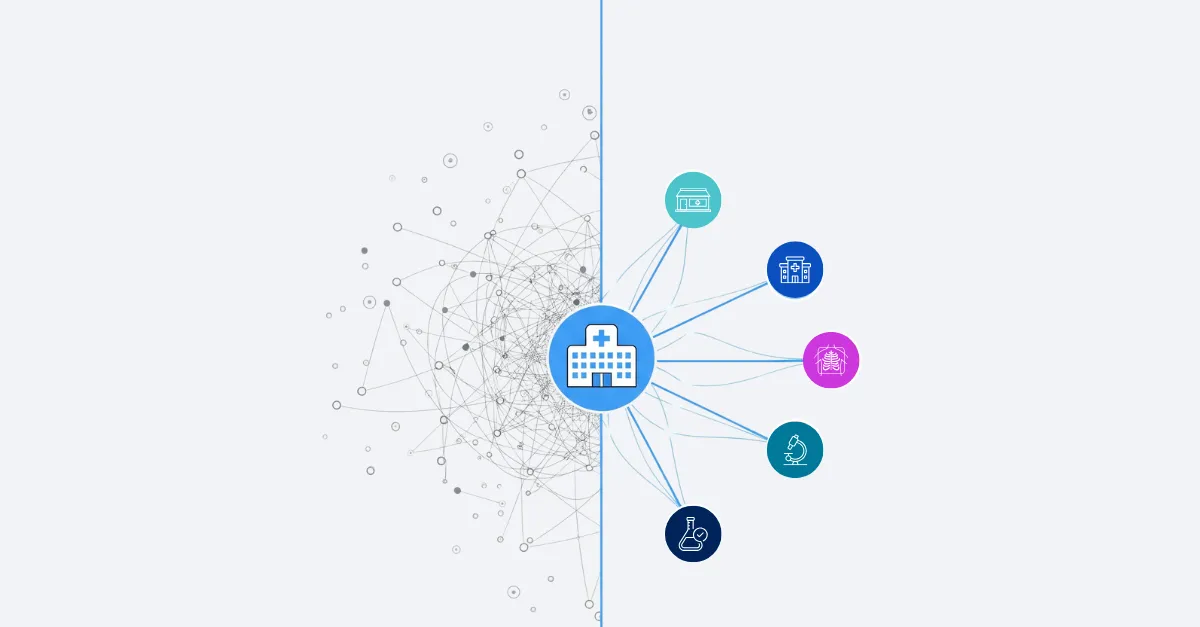
Less than vendors suggest. A long list of connected sites doesn't help if those connections still require manual requests and waiting. What matters is whether your key referral partners are connected reliably, whether exchanges run automatically and whether imaging lands directly in the EHR. Quality and automation beat sheer network size.
Answers
How Does SMART on FHIR Close the Imaging Interoperability Gap?
FHIR gives EHRs, VNAs and other systems a common language for exchanging health data, and SMART on FHIR lets clinicians securely launch imaging apps from inside the patient chart. Together they close interoperability's last mile: the gap between imaging that's available somewhere and imaging that's actionable at the point of care.

Answers
How Can AI Replace Manual Procedure Mapping for Prior Imaging Retrieval?
A large language model trained on radiology procedures can understand what an exam means instead of relying on rigid code maps. Medicom Smart Search uses an LLM trained on more than 50 million radiology procedures to find relevant priors for upcoming appointments, works after an HL7 connection without months of mapping and adapts when compendiums change.
Your Plan for Enterprise Imaging Interoperability
Talk to one of our experts to plan your interoperability strategy, explore workflows, or get a personalized demo. We’re here to help.
