




Why Are Radiologists Moving Into Federal Health Leadership?
Radiology was the first medical specialty to fully digitize and among the first to put AI into daily practice, so radiologists bring rare experience with data, AI and digital workflows. That's why Dr. Nicole Saphier was nominated for US Surgeon General and Dr. Thomas Keane was appointed National Coordinator for Health IT in 2025.
Share


Table of contents
The nomination of Dr. Nicole Saphier as US Surgeon General marks a milestone: for the first time, the nation's top doctor could be a board-certified radiologist. It follows the 2025 appointment of Dr. Thomas Keane, also a radiologist, as National Coordinator for Health IT.
What Makes Radiologists Suited to Health Policy Leadership?
Radiology has long served as healthcare's technology proving ground. It was the first field to fully digitize, and radiologists have worked paperless since the 1990s.
- AI Early Adopters: Radiologists were among the first to use AI in daily clinical work and understand it as a tool that supports human judgment and efficiency. That experience matters as federal agencies work to regulate and implement AI safely.
- Enterprise Data Thinking: Modern radiology means managing massive data streams to make precise decisions, the same skill complex public health challenges demand.
- Interoperability Champions: Radiologists see firsthand what happens when imaging doesn't move, which has made interoperability a federal priority.
How Is Federal Policy Pushing Imaging Interoperability?
The #DitchTheDisk movement highlighted the absurdity of patients carrying CDs between doctors. In 2026, the Office of the National Coordinator for Health IT issued a request for information on diagnostic imaging interoperability standards and certification, prioritizing a streamlined electronic system for exchanging images across the healthcare network.
What Does Radiology-Led Leadership Mean for Patients, Providers and Health Systems?
- Patients Move Closer to a Disc-Free Future: Leaders who understand imaging are pushing for electronic exchange that follows the patient.
- Providers Get Policy Built on Clinical Reality: Leaders who speak the language of AI, data and digital workflows can bridge technology and day-to-day practice.
- Health Systems Should Prepare Now: Federal attention on imaging interoperability signals that digital-first exchange is becoming an expectation.
How Does Medicom Help?
Medicom helps organizations adopt the digital-first image exchange that federal leaders are championing, without replacing existing systems. Read the full post, From the Reading Room to Washington, learn how federal policy may end physical media, or connect with us.
Frequently Asked Questions
Has a radiologist ever been US Surgeon General?
Not yet. Dr. Nicole Saphier's nomination marks the first time the nation's top doctor could be a board-certified radiologist.
Who is the National Coordinator for Health IT?
Dr. Thomas Keane, a radiologist, was appointed National Coordinator for Health IT in 2025.
Why is radiology considered a technology leader in medicine?
It was the first specialty to fully digitize, has worked paperless since the 1990s and was among the first to use AI in daily clinical workflows.
What is the ONC imaging interoperability RFI?
It's a 2026 request for information from the Office of the National Coordinator for Health IT on diagnostic imaging interoperability standards and certification.
More Answers
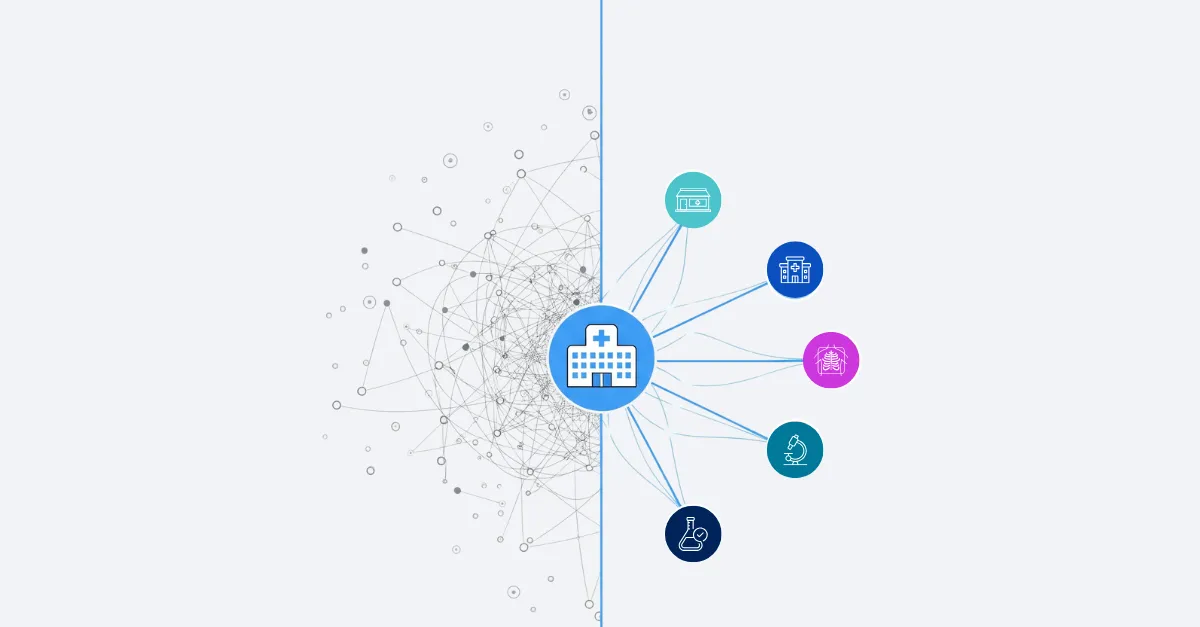
Answers
Does the Size of an Image Exchange Network Matter?
Less than vendors suggest. A long list of connected sites doesn't help if those connections still require manual requests and waiting. What matters is whether your key referral partners are connected reliably, whether exchanges run automatically and whether imaging lands directly in the EHR. Quality and automation beat sheer network size.

Answers
How Does SMART on FHIR Close the Imaging Interoperability Gap?
FHIR gives EHRs, VNAs and other systems a common language for exchanging health data, and SMART on FHIR lets clinicians securely launch imaging apps from inside the patient chart. Together they close interoperability's last mile: the gap between imaging that's available somewhere and imaging that's actionable at the point of care.

Answers
How Can AI Replace Manual Procedure Mapping for Prior Imaging Retrieval?
A large language model trained on radiology procedures can understand what an exam means instead of relying on rigid code maps. Medicom Smart Search uses an LLM trained on more than 50 million radiology procedures to find relevant priors for upcoming appointments, works after an HL7 connection without months of mapping and adapts when compendiums change.
Your Plan for Enterprise Imaging Interoperability
Talk to one of our experts to plan your interoperability strategy, explore workflows, or get a personalized demo. We’re here to help.
