




What's the Difference Between Image Exchange and Imaging Interoperability?
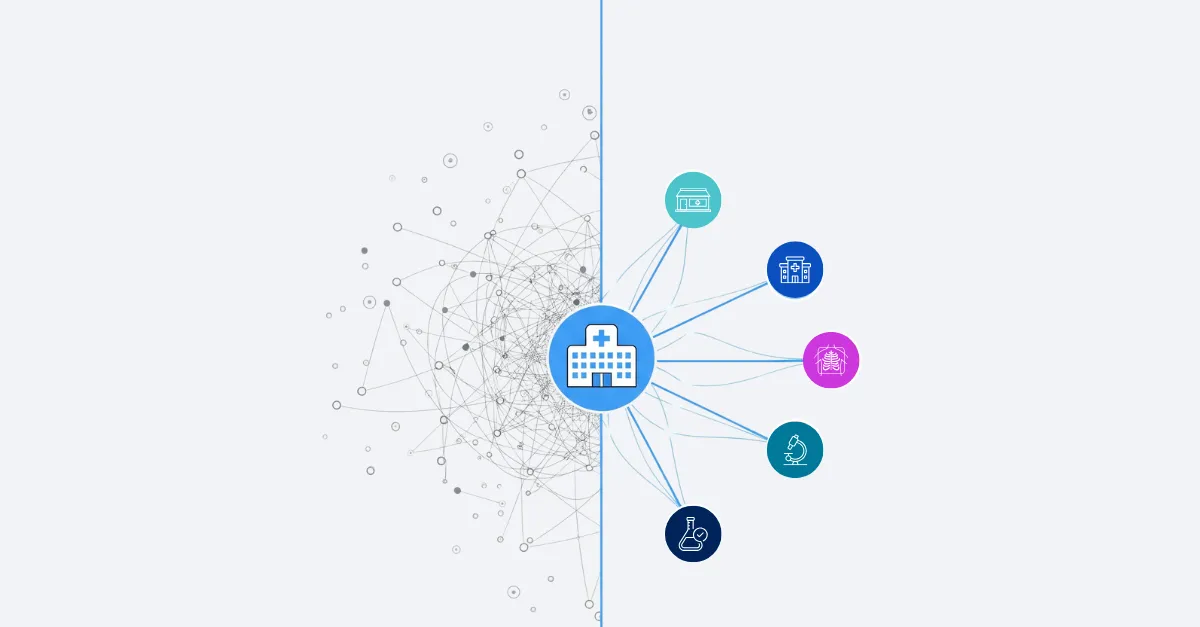
Image exchange moves a file from point A to point B, often ending in a portal link or a CD upload. Imaging interoperability brings that data into the clinical workflow so it's ready to use, matched to the patient and available alongside the current study. The gap between the two creates the clicks, logins and searching that drive radiologist burnout.
Share


Table of contents
Radiologist burnout is usually blamed on volume, and the pressure is real. A 2022 Radiology paper found that, after accounting for standard interruptions, radiologists often have less than one second per cross-sectional image to meet the standard of care. Volume is only half the story. At RSNA, Dr. Jay R. Parikh and Dr. Frank Lexa pointed to workflow friction, the clicks, logins and searching, as a primary driver of burnout.
What Is Image Exchange?
Image exchange is transactional. It moves a file from one place to another, often ending with a link to an external portal or a CD upload. The data technically moves, but it doesn't land in the clinical workflow, so the burden of integration shifts to the user. The radiologist has to:
- Hunt for Files: Search external portals for the right study.
- Switch Contexts: Log into different systems to see it.
- Compare Mentally: Integrate the prior with the current exam without side-by-side tools.
What Does True Imaging Interoperability Look Like?
Across healthcare, interoperability means coordinated use of data across systems, the way labs and medications already work. For imaging, that means outside studies are ingested, matched and available in the workflow without anyone searching.
Why Should the EHR Be the Hub for Imaging?
Radiologists spend most of their time in PACS, but the EHR is the system of record for patient context, orders and longitudinal history. Drs. Stacy O'Connor and Dorothy Sippo have emphasized workstation optimization and taking manual tasks out of human hands as a defense against burnout.
- A Unified Patient Narrative: Ingesting outside imaging into the EHR workflow gives providers the complete story without searching for missing pieces.
- Respect for Muscle Memory: Keeping work in the system staff already know lowers cognitive load and protects the training investment.
Why Hasn't AI Closed the Gap?
A 2026 European Radiology review by Drs. Parikh and Lexa found the balance of data doesn't support that AI improves the drivers of burnout. The issue is where AI sits in the workflow. Operational AI, which automates ingestion, patient matching and hanging protocols before the study opens, can help, but it needs ingested data. It can't run on an exchange hyperlink.
Why Does the Difference Matter for Patients, Providers and Health Systems?
- Patients Get Reads Informed by Priors: When comparisons are ready, radiologists spend their limited time on diagnosis.
- Radiologists Lose the Busywork: No portal hunting, fewer logins and less mental juggling reduce the friction behind burnout.
- Health Systems Protect Their Workforce: As Dr. Parikh put it, the mindset must shift from "no margin, no mission" to "no people, no mission."
How Does Medicom Help?
Medicom's SMART on FHIR applications bring outside imaging into the EHR workflow so it's matched, ingested and ready. Read the full post, Reducing Workflow Friction to Help Support Radiologist Well-Being, or book a consultation.
Frequently Asked Questions
Is image exchange the same as interoperability?
No. Image exchange moves a file. Interoperability integrates that data into the clinical workflow so it's usable without manual searching or logins.
How much time do radiologists have per image?
A 2022 Radiology paper found radiologists often have less than one second per cross-sectional image once standard interruptions are counted.
Why use the EHR as the hub for outside imaging?
The EHR is the system of record for patient context, orders and history, and staff already know it, which lowers cognitive load.
What is operational AI in radiology?
AI that automates administrative tasks like data ingestion, patient matching and hanging protocols before the radiologist opens a study.
More Answers
Answers
Does the Size of an Image Exchange Network Matter?
Less than vendors suggest. A long list of connected sites doesn't help if those connections still require manual requests and waiting. What matters is whether your key referral partners are connected reliably, whether exchanges run automatically and whether imaging lands directly in the EHR. Quality and automation beat sheer network size.
Answers
How Does SMART on FHIR Close the Imaging Interoperability Gap?
FHIR gives EHRs, VNAs and other systems a common language for exchanging health data, and SMART on FHIR lets clinicians securely launch imaging apps from inside the patient chart. Together they close interoperability's last mile: the gap between imaging that's available somewhere and imaging that's actionable at the point of care.

Answers
How Can AI Replace Manual Procedure Mapping for Prior Imaging Retrieval?
A large language model trained on radiology procedures can understand what an exam means instead of relying on rigid code maps. Medicom Smart Search uses an LLM trained on more than 50 million radiology procedures to find relevant priors for upcoming appointments, works after an HL7 connection without months of mapping and adapts when compendiums change.
Your Plan for Enterprise Imaging Interoperability
Talk to one of our experts to plan your interoperability strategy, explore workflows, or get a personalized demo. We’re here to help.
