Background. Procedure descriptions underpin prior-study retrieval, hanging protocols, duplicate detection, and AI in radiology, yet their consistency is rarely measured where it matters most: across institutional boundaries.
Methods. We analyzed 22,143 prior imaging searches over a recent seven-day period across 124 US provider organizations on the Medicom network, yielding 404,748 procedure-description instances and 17,262 distinct strings. DICOM Modality metadata from 1,345,763 objects received through Medicom's SMART on FHIR applications, a largely distinct customer population, provided a second vantage point.
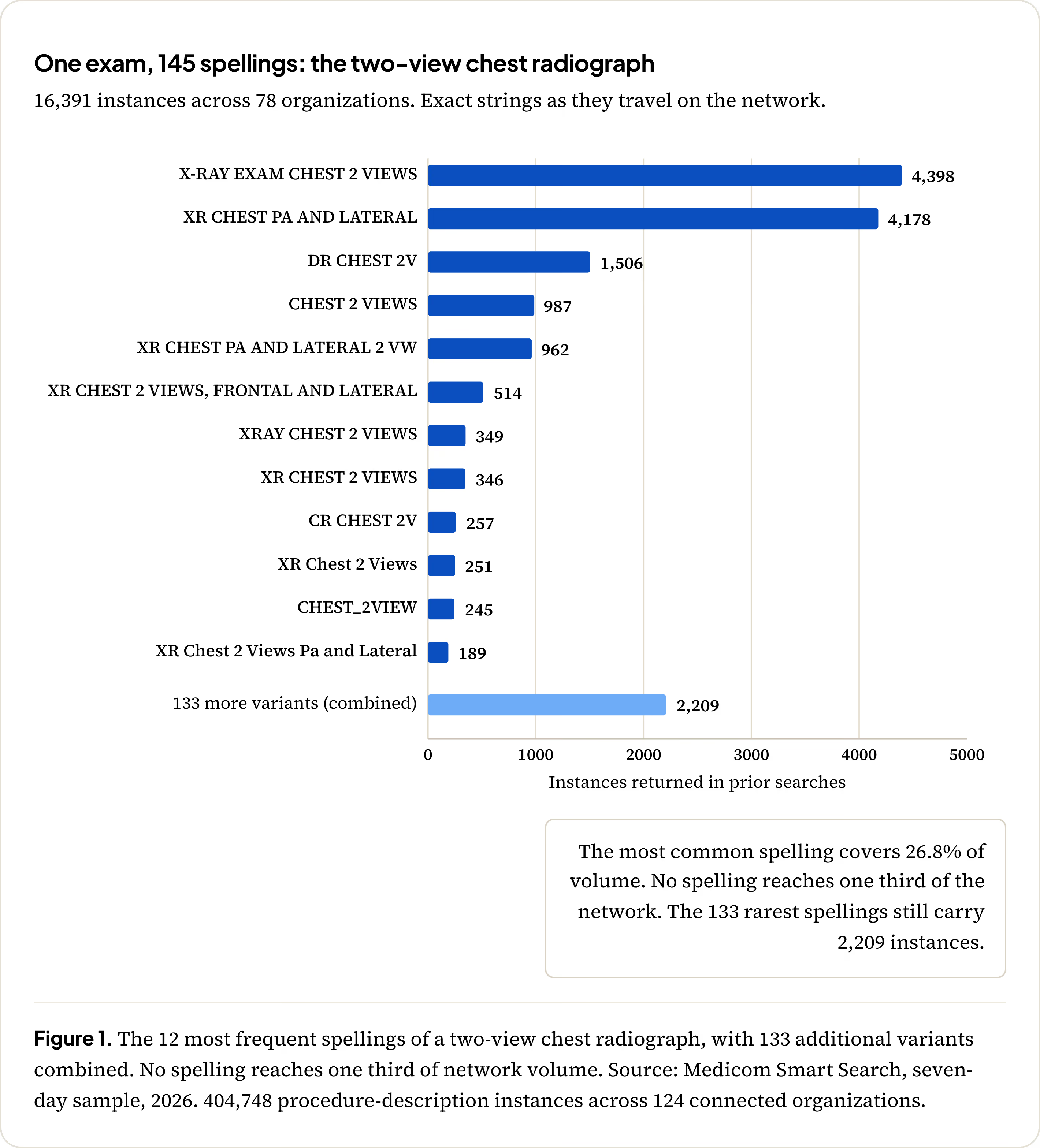
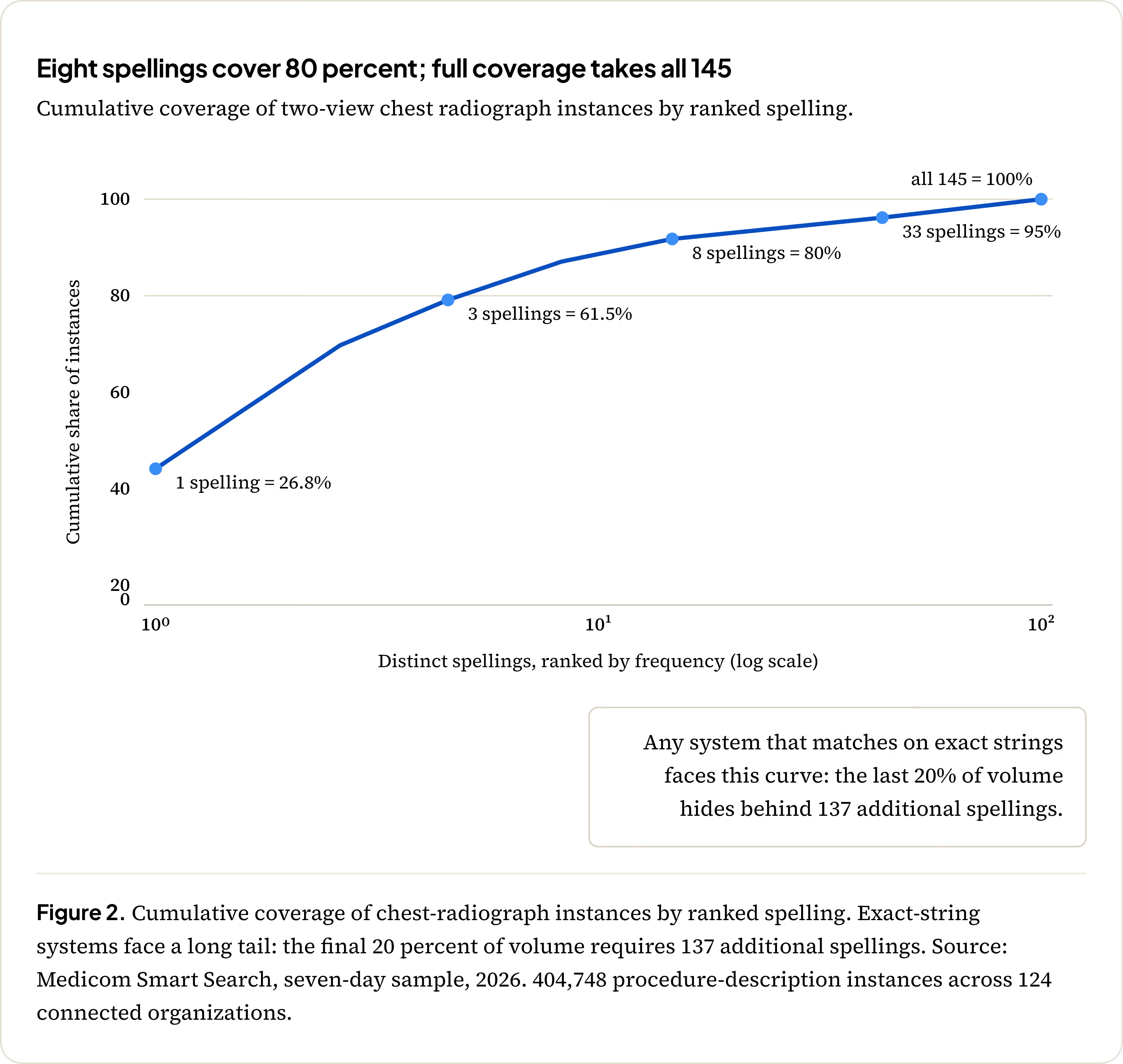
Results. Six routine procedures appeared under 1,258 distinct descriptions. Only 9.1 percent of organization pairs shared even one exact description for the same concept. Among descriptions naming a sided body part, 28.2 percent omitted laterality; contrast phase appeared in ten notations; the Modality field carried 121 distinct values.
Conclusions. Procedure vocabulary remains deeply local, and internal catalogs understate the problem because it becomes visible only at the network boundary. Systems that consume descriptions should match on clinical meaning, and standardization programs should measure drift where exchange happens.
Introduction
Radiology has spent two decades building shared vocabularies for how imaging procedures should be named. Logical Observation Identifiers Names and Codes (LOINC) and the Radiological Society of North America (RSNA) RadLex Playbook define a common language, DICOM constrains the metadata that travels with every study, and nearly every health system maintains a curated internal procedure catalog. What nobody has been able to measure is how well those efforts hold up at the moment a patient's imaging history crosses from one institution to another. Medicom operates at that crossing point, moving imaging among hospitals, imaging centers, and specialty practices every day, and that traffic offers a view of standardization no single institution can produce from inside its own walls.
We asked a simple question of that traffic: When institutions exchange imaging, how consistent is the language that travels with it?
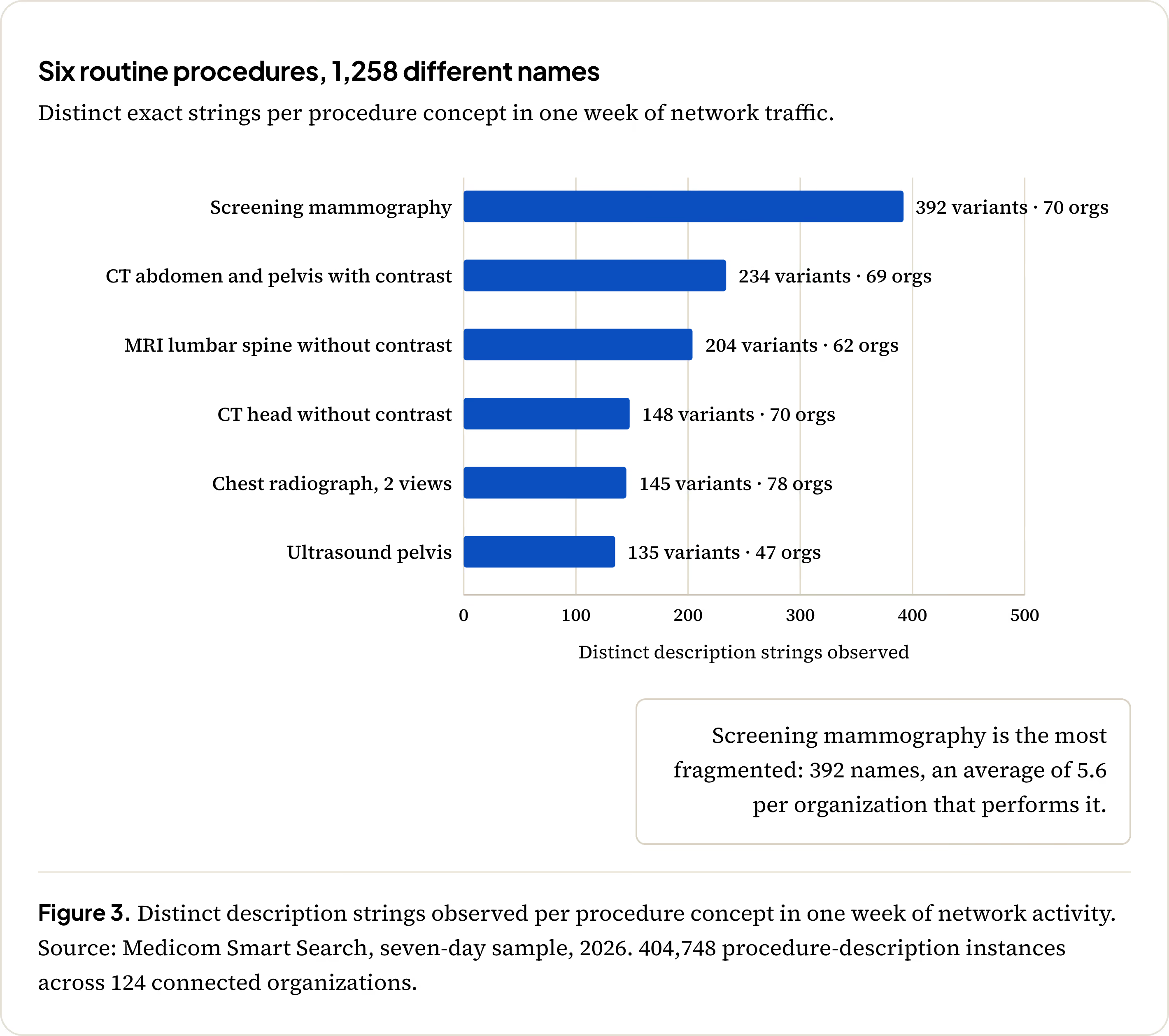
Every routine procedure we examined behaves the same way: screening mammography appeared under 392 distinct names across 70 organizations, CT of the abdomen and pelvis with contrast under 234, MRI of the lumbar spine without contrast under 204, CT of the head without contrast under 148, and pelvic ultrasound under 135, totaling 1,258 distinct strings for six routine procedures (Figure 3).
Agreement Between Institutions is the Exception
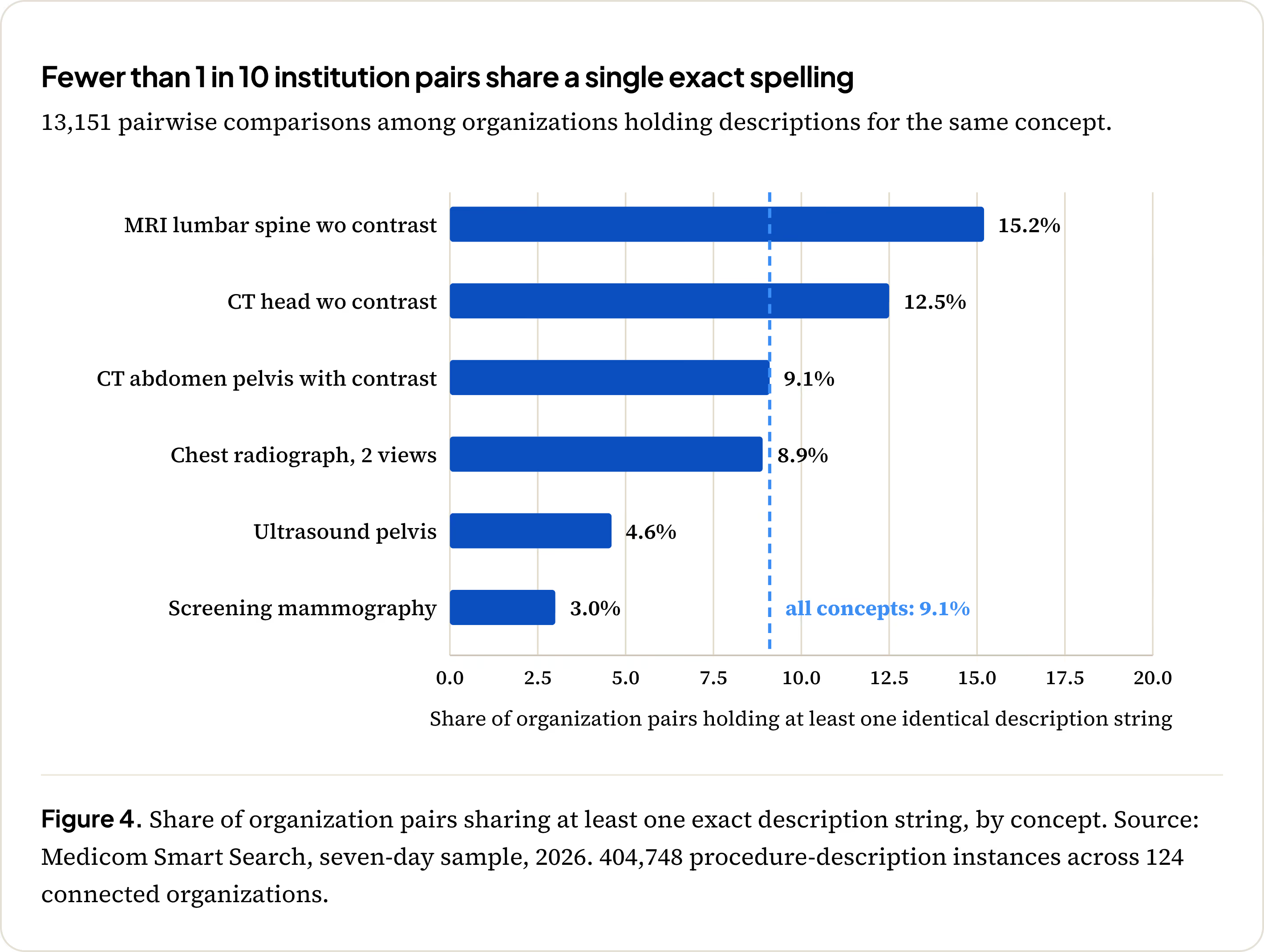
This may be the study's central finding. Among 13,151 pairs of organizations holding descriptions for the same concept, only 9.1 percent share even one identical string, ranging from 3.0 percent for screening mammography to 15.2 percent for lumbar-spine MRI (Figure 4). A randomly chosen pair of institutions performing the same routine exam will, more than nine times in ten, describe it with no spelling in common.
Clinically Material Attributes
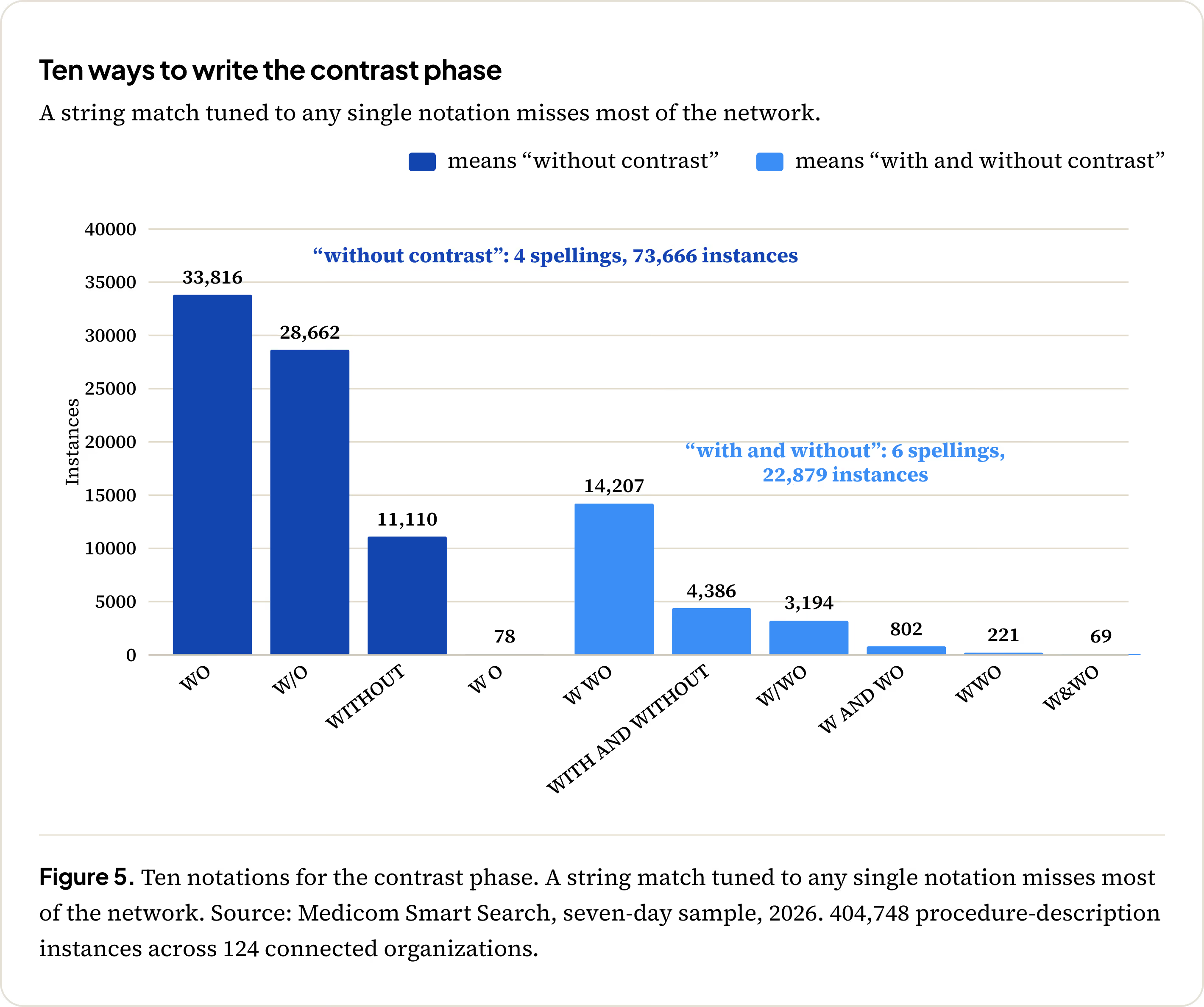
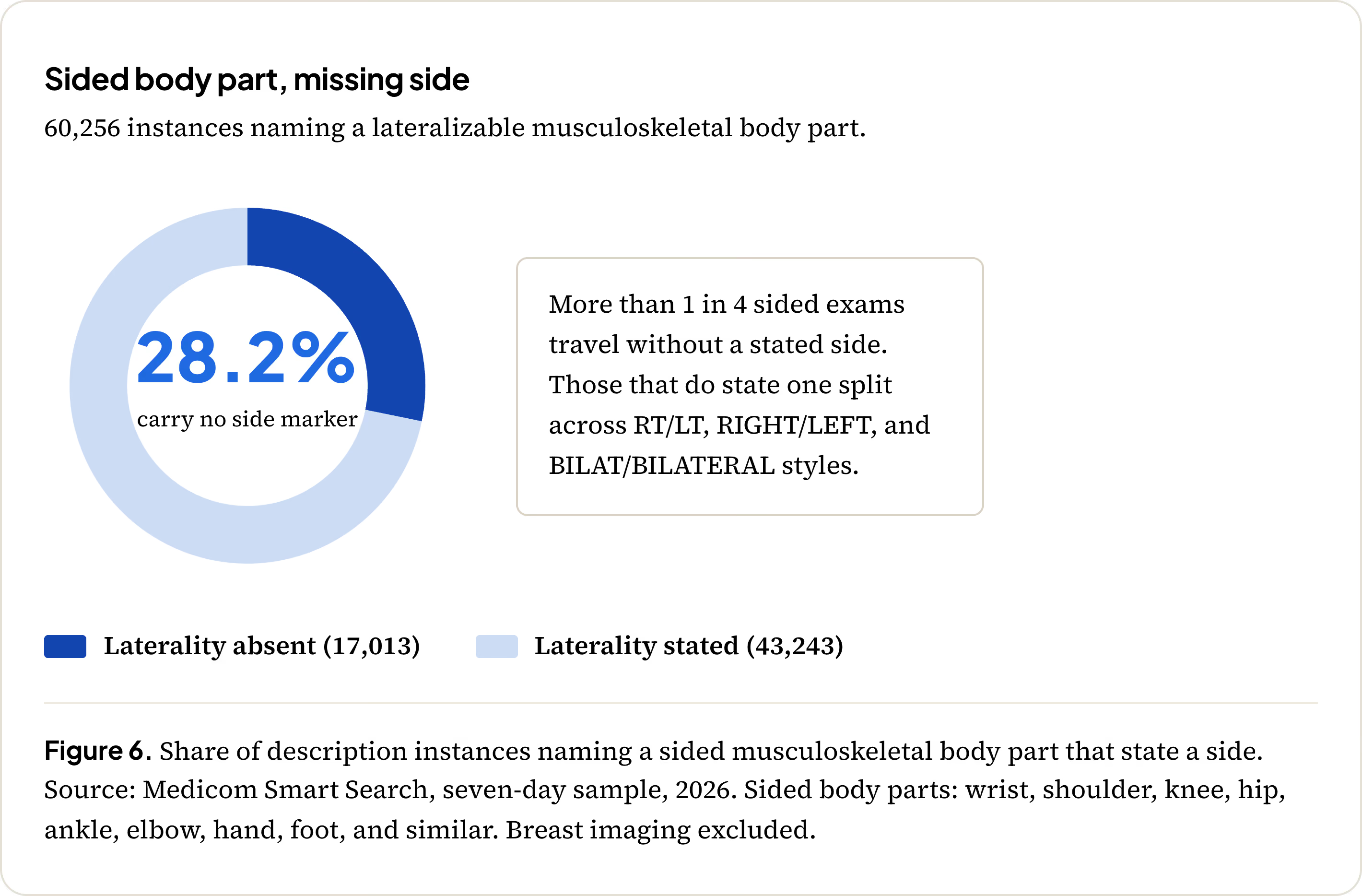
The variation reaches attributes with direct clinical weight. Contrast phase appears in at least ten notations across the 96,545 instances carrying one: WO, W/O, WITHOUT, and W O mean without contrast (73,666 instances), while W WO, WITH AND WITHOUT, W/WO, W AND WO, WWO, and W&WO mean with and without (22,879 instances; Figure 5). Laterality fares worse: among 60,256 instances naming a sided body part such as a wrist, knee, or shoulder, 17,013, or 28.2 percent, carry no side marker at all (Figure 6).
Drift in the Most Constrained Field
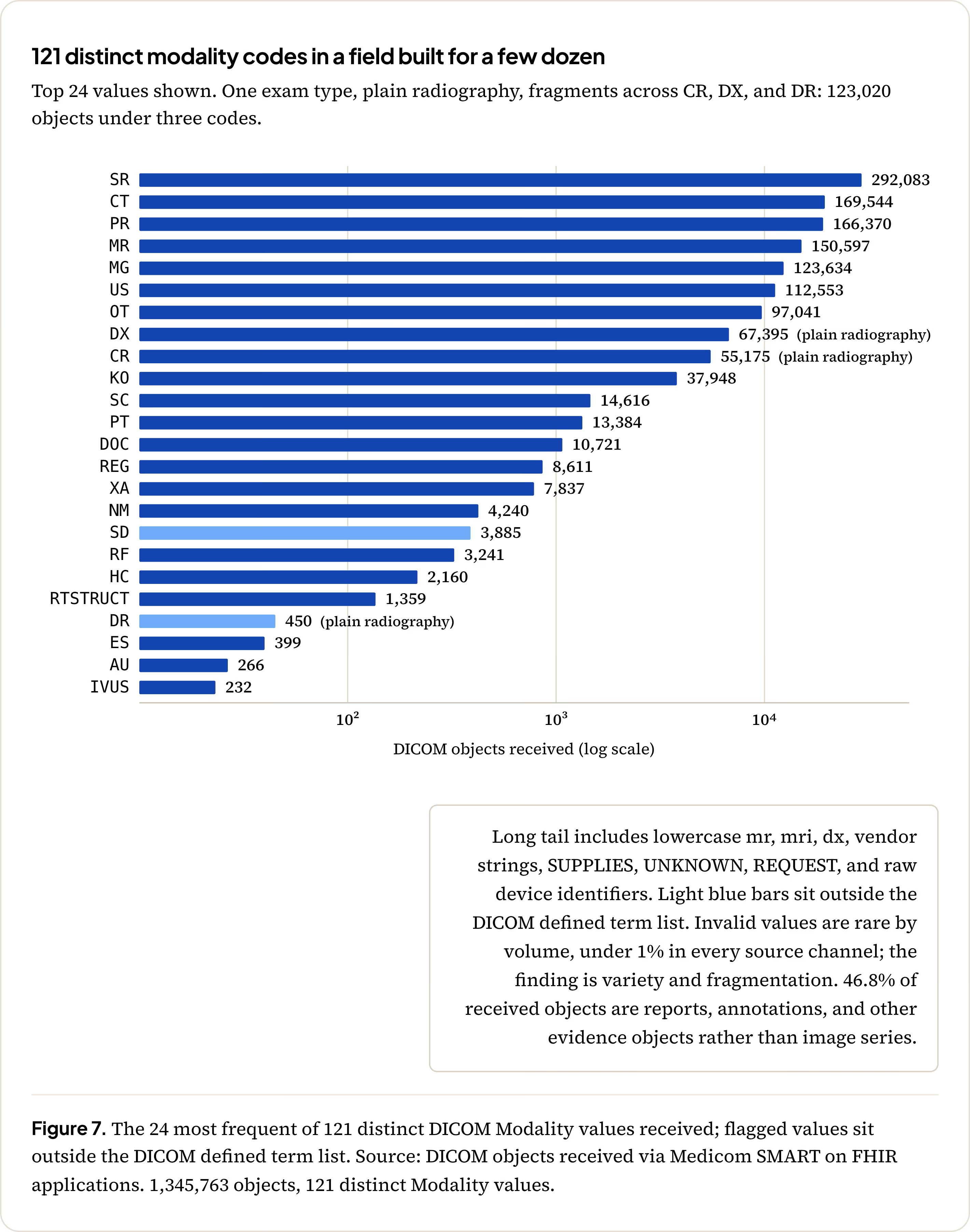
Modality is supposed to draw from a defined list of a few dozen DICOM terms. Across the 1,345,763 DICOM objects sampled from those received through our SMART on FHIR applications, we observed 121 distinct Modality values, including lowercase variants, spelled-out phrases, vendor strings, SUPPLIES, UNKNOWN, and raw device identifiers (Figure 7). Truly invalid values are rare by volume, well under one percent of objects in every source channel; the finding is the sheer variety, and the fragmentation of single exam types across multiple valid codes. Plain radiography alone arrives under three: CR (55,175 objects), DX (67,395), and DR (450). The same feed shows that 46.8 percent of received objects are structured reports, presentation states, key object selections, and other evidence objects, so description text increasingly labels far more than pixels. If the most tightly governed attribute in the standard drifts this far in the wild, free-text descriptions never stood a chance.
Institutions Disagree with Themselves
We found 962 cases in which a single organization writes the same normalized procedure more than one way, such as one academic health system holding both MRI CERVICAL SPINE WO CONTRAST and MRI SPINE CERVICAL W/O CONTRAST in active use. The problem also resists trivial cleanup: after folding case, punctuation, spacing, and common abbreviations, only 16.4 percent of distinct strings collapse into another. The remaining 83.6 percent of variation reflects substantive differences in local vocabulary that no formatting script can reconcile.
Discussion
Every one of these strings eventually lands in front of a person or a system that must decide what it means. A radiologist reading a screening mammogram needs the right priors on the screen. A hanging protocol keys on the description to arrange them. A duplicate ordering check compares a new order against history. An AI model trains and makes inferences directly on the description string. Each of these breaks quietly when the vocabulary shifts at an institutional boundary, and the patients most affected are exactly the ones whose care crosses those boundaries: trauma transfers, oncology referrals, second opinions, and anyone whose imaging lives in more than one place.
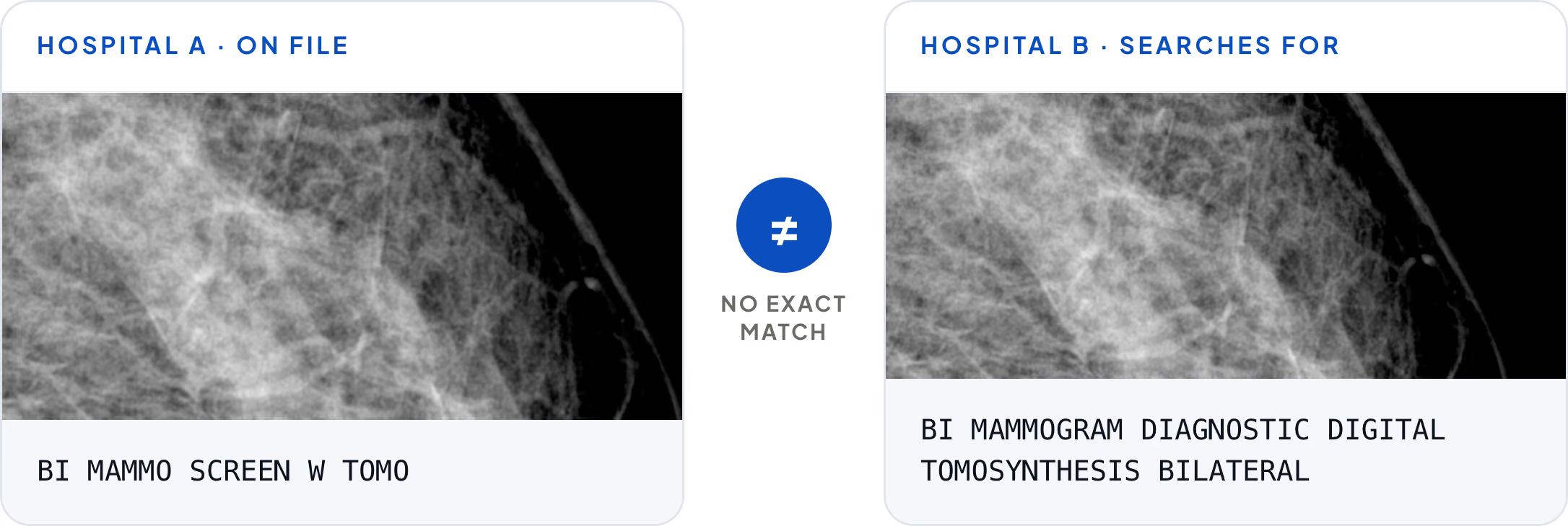
The pairwise-agreement result sharpens the point. With 9.1 percent of institution pairs sharing even one exact string for the same exam, exact matching between any two institutions fails as the default rather than the edge case. This is why relevance inside Medicom Smart Search is computed on clinical meaning: in production it returns a mean of 17.3 candidate priors per search and judges a mean of 3.6 relevant, a 79 percent reduction. A search launched from one organization's BI MAMMO SCREEN W TOMO phrasing surfaces a partner's BI MAMMOGRAM DIAGNOSTIC DIGITAL TOMOSYNTHESIS BILATERAL, because matching on spelling would leave 392 dialects of a screening mammogram invisible to one another.
The disorder is also invisible from inside any single institution. Internal catalogs look tidy, agreement within an organization is high, and the fragmentation only materializes when studies cross organizational lines. That asymmetry explains why two decades of standardization work can coexist with the numbers above: the drift accumulates precisely where no one institution can see or govern it.
Recommendations for the Industry
Five practices follow directly from these measurements.
01
Map at the Boundary:
Standard terminologies such as the LOINC RSNA Radiology Playbook deliver the most value when applied where studies cross organizational lines. Exchange infrastructure should attach a mapped standard code to every study it moves, while preserving the local description for provenance.
02
Make Laterality and Contrast Structured:
Both attributes have dedicated homes in DICOM and in order-entry workflows. Requiring them as discrete, validated fields at ordering and at the modality worklist closes the largest clinical gaps we measured: 28.2 percent of sided-exam descriptions omit a side, and contrast phase travels in ten notations. Laterality is harder to enforce than it first appears: most systems lack the logic to determine which procedures are sided in the first place, so standardization has to precede validation — first establishing which standard procedures require a laterality value, then requiring it, ideally at ordering rather than only at the modality worklist, where errors are costlier to unwind. CMS could reinforce this requirement through billing rules, giving health systems a regulatory as well as clinical reason to close the gap.
03
Measure Vocabulary Drift as a Quality Metric
Health systems already track report turnaround and radiation dose; distinct descriptions per procedure concept deserve the same discipline, tracked internally and against what arrives from exchange partners. Doing so requires health systems to adopt ontologies such as RadLex and present interoperability platforms with the mapping from their internal compendium to standardized codes. Internal inconsistency is material: we found 962 cases of one organization spelling the same procedure multiple ways.
04
Treat Relevancy as Infrastructure:
Prior retrieval, hanging protocols, duplicate detection, and AI cohort selection all consume descriptions, and each should match on clinical meaning. Teams procuring enterprise imaging platforms should test retrieval across vocabularies directly, because fewer than 1 in 10 institution pairs share a single exact spelling for the same exam.
05
Preserve Source Fidelity:
Normalize toward lower entropy, but annotate rather than overwrite. Reducing the variety of ways a single exam concept is described is the goal — every merge of two dialects into one shared term is a genuine reduction in entropy. But the reduction should happen by annotation, not by overwriting: a receiving system needs both the local dialect and the shared translation to remain auditable, and improving the mappings themselves requires the original text.
Limitations
Instance-level percentages are search-weighted: descriptions attached to frequently searched patients count each time they appear, so figures reflect what retrieval encounters in practice and should be read in that frame. The search observation window is seven days, and single-week sampling may underrepresent rare procedures. Concept clusters are defined by pattern matching on free text and may include or exclude edge variants. The two data populations overlap only partially, and neither is a representative sample of United States imaging as a whole. Finally, exact string comparison understates semantic agreement: 16.4 percent of distinct strings collapse under simple normalization, though the remaining 83.6 percent of variation is substantive.
Methodology and Notes
Search data come from Medicom Smart Search query logs covering a recent seven-day period in 2026: 22,143 prior imaging search events from 30 requesting organizations against 113 searched organizations, with 19 organizations appearing on both sides (124 distinct in all). Parsing the returned prior-study lists, a mean of 17.3 descriptions per search, yields 404,748 procedure-description instances and 17,262 distinct strings.
Pairwise agreement is the share of organization pairs, among organizations holding at least one description for a concept, whose description sets intersect on at least one exact string (13,151 pairs across six concepts). Coverage curves rank distinct strings by frequency and accumulate instance share. Relevance counts parse the priors returned per search and those judged relevant by the Smart Search relevance engine (means of 17.3 and 3.6).
Object data cover 1,345,763 DICOM objects received into Medicom's cloud platform through its SMART on FHIR applications between October 2024 and July 2026, arriving from provider organizations, satellite locations, patient uploads, and imported media, and spanning 121 distinct values of the DICOM Modality attribute. The Smart Search and SMART on FHIR application customer bases overlap only partially; the two datasets describe related but distinct networks, and neither is a representative sample of United States imaging as a whole.
Laterality analysis covers descriptions naming a sided musculoskeletal body part; breast imaging is excluded because bilateral acquisition is often implied. Normalization folds case, punctuation, spacing, and common abbreviation synonyms. No patient-level data appears in this analysis.
Appendix A · Network Reference
The 124 organizations in this sample — 30 initiating organizations and the partner institutions they searched against — are summarized below by category. Categories are deliberately broad so that no participant can be identified; no organization is named by identity, city, or state.
Organization Category
Count
Community, regional & rural hospitals
57
Integrated delivery networks & multiregion systems
22
Outpatient imaging providers
17
Academic health systems & teaching hospitals
12
Oncology & other specialty groups
8
Orthopedic specialty groups
6
Federal health facilities
2
Total
124
Network roles: 11 organizations only initiate searches, 94 only respond, and 19 do both. Participants span more than 15 states across all four US census regions and range from quaternary academic medical centers to critical-access hospitals. Activity is concentrated: The five most active initiators account for 59 percent of search volume, and the most active single health system accounts for 29 percent.
About the Author
Michael Rosenberg is CEO and cofounder of Medicom Technologies, an enterprise imaging interoperability company. He cofounded Medicom in 2015 out of North Carolina State University to solve the exchange of medical images across institutions, historically dependent on CDs and couriers. Trained as an industrial and systems engineer, he works closely with Medicom's largest health system customers on enterprise imaging needs across radiology, cardiology, pathology, and beyond — and maintains a deep interest in how image exchange shapes both individual health systems and the broader healthcare landscape.
About Medicom
Medicom Technologies moves medical images among hospitals, imaging centers, and specialty practices nationwide, serving thousands of healthcare organizations across the US. If you'd like to learn more about working with Medicom, reach out here.

.svg)